 Available in US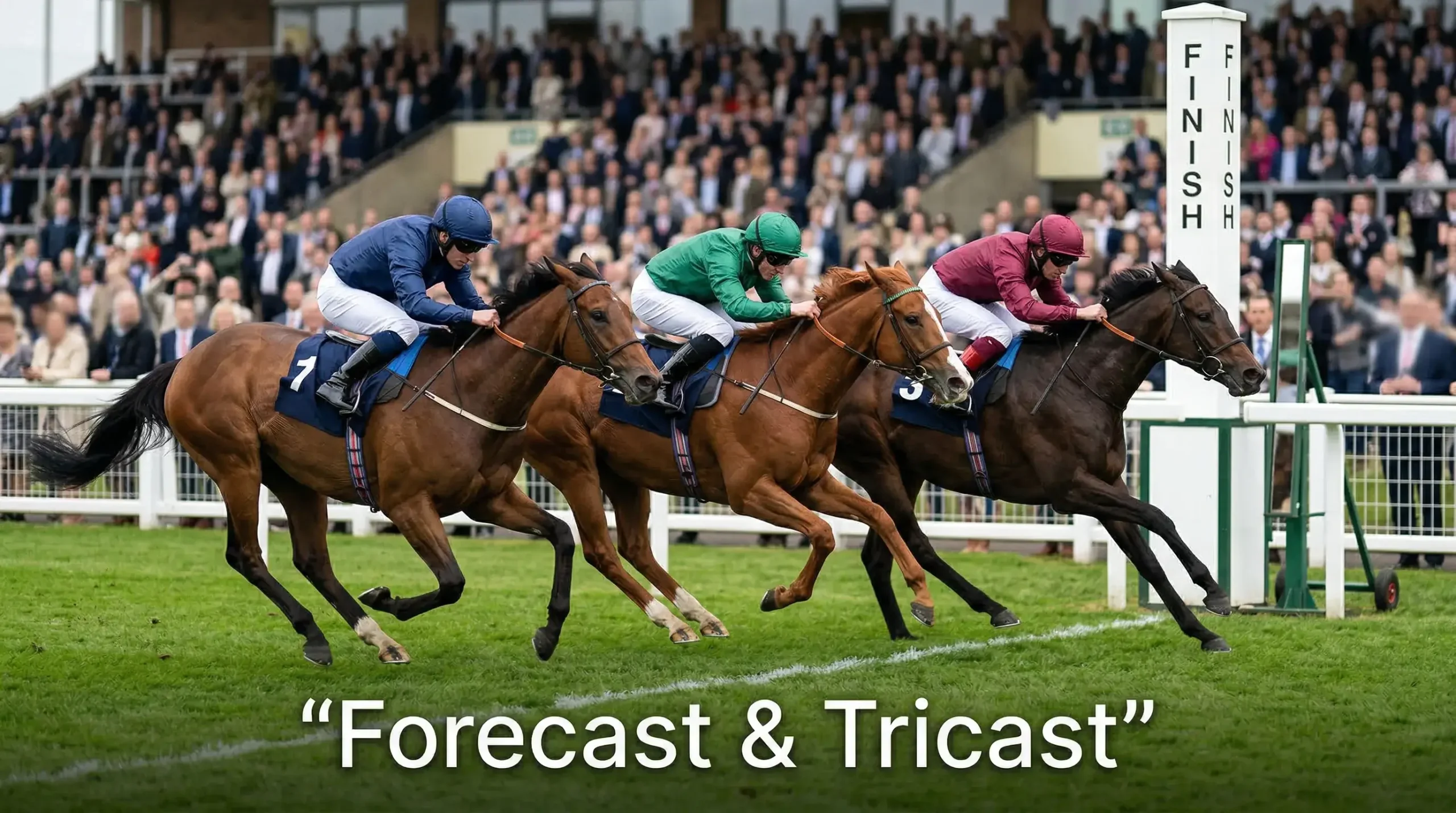
Picking a winner is satisfying. Picking the first two home in the correct order is considerably harder but proportionally more rewarding. Forecast and tricast bets challenge you to predict the podium, demanding accuracy that casual punters rarely achieve but offering returns that single-horse bets cannot match.
These bet types have existed for decades, originally through the Tote pools and later through bookmaker fixed-odds offerings. The appeal lies in magnified returns from successful predictions. A race with a 5/1 winner and a 10/1 second might produce a forecast dividend of 100/1 or more, depending on how the market assessed that specific combination. For punters who believe they see things the crowd misses, forecasts and tricasts offer a vehicle to express that conviction.
Michael Shinners, Head of Sports PR at Sky Bet, observed during Cheltenham Festival 2025: “In general, turnover held up well over the festival, particularly as results were not punter-friendly in the main.” Forecast and tricast markets reflect this dynamic: unpopular results generate spectacular dividends precisely because few people backed them. Predict the podium correctly when others cannot, and the returns reflect your insight.
While straight forecasts are popular with fixed-odds bookmakers, many professional punters prefer the pool-based liquidity of Tote betting and Placepots for exotic wagers.
Understanding Forecast Bet Variations in UK Horse Racing
A straight forecast requires selecting two horses to finish first and second in exact order. If you pick Horse A to win and Horse B to finish second, only that specific outcome wins your bet. Horse B winning with Horse A second loses. The precision required explains why straight forecast dividends often exceed the combined odds of the two horses involved.
A reverse forecast covers both possible orders of your two selections. Horse A first with Horse B second, or Horse B first with Horse A second, both win. This costs two unit stakes rather than one, doubling your outlay but significantly increasing your chance of success. When you believe two horses will fill the first two places but lack confidence about which will prevail, reverse forecasts make sense.
Combination forecasts extend coverage further. If you select three horses for a combination forecast, you cover all six possible first-second combinations. Four selections create twelve combinations. Five selections produce twenty combinations. Costs multiply rapidly, so combination forecasts suit smaller unit stakes. The benefit is that any two of your selections finishing first and second in any order wins.
Each-way forecasts exist but work differently from each-way singles. Some bookmakers offer each-way combination forecasts where place terms apply to your selections reaching placed positions rather than first and second specifically. Terms vary by operator, and checking specific rules before placing prevents confusion.
Forecast betting requires minimum field sizes. Most bookmakers demand at least three runners for forecasts to be available. Races with fewer starters are settled on place terms only or become win-only markets. Large-field handicaps provide the richest forecast opportunities, with more combinations available and dividends typically higher due to competitive markets.
Named forecasts differ from numbered forecasts historically, though this distinction matters less with modern betting slips. A named forecast specifies the horses by name; a numbered forecast uses racecard numbers. Both achieve the same practical result when placed correctly. Modern betting apps handle this automatically, displaying horses by name while processing bets appropriately.
How Tricast Bets Work
Tricasts extend forecasts by one position, requiring you to predict first, second, and third in exact order. The additional requirement creates dramatically longer odds. Where a forecast might pay 50/1, the tricast on the same race could pay 500/1 or more. The difficulty increase is substantial, but so is the reward.
Straight tricasts demand exact order across all three positions. Combination tricasts, covering all possible orderings of your selections, cost six times a single tricast for three horses. Adding more horses multiplies combinations rapidly: four horses create 24 combinations, five create 60. The cost escalation limits practical use, but covering several fancied horses in a competitive race can generate substantial returns.
Tricast betting requires minimum field sizes, typically eight runners for handicaps and three runners for non-handicaps. Not all races offer tricast markets; bookmakers set availability based on race conditions and betting interest. Major meetings like Cheltenham and Aintree feature tricast markets on virtually every race, while minor weekday fixtures may offer limited availability.
Returns on tricasts can appear almost arbitrary compared to the odds of individual horses. A tricast combining a 2/1 favourite, a 5/1 second, and an 8/1 third might pay significantly less than a tricast combining a 10/1 winner with 3/1 and 4/1 placed horses. The relationship depends on how betting markets priced each specific combination, which reflects collective punter opinion rather than simple probability mathematics.
Trifecta is the Tote pool equivalent of the fixed-odds tricast. Pool dividends fluctuate based on stake distribution among bettors, sometimes paying more than fixed-odds tricasts and sometimes less. Checking both options before placing identifies better value for your specific selections. The principles are identical; only the payout mechanism differs.
Computer Straight Forecast vs Declared Dividends
Two systems determine forecast payouts in UK racing: the Computer Straight Forecast and declared Tote dividends. Understanding both helps evaluate where to place forecast bets for maximum value.
The CSF is a formula-based calculation that bookmakers use when no Tote forecast pool exists or when the Tote dividend would be anomalously low. The formula considers the starting prices of the first two horses and produces a standardised dividend. All bookmakers offering CSF returns pay the same figure, ensuring consistency regardless of where you bet.
Tote Exacta dividends come from actual pool betting, reflecting how much money backed each combination. When significant stakes backed the winning combination, dividends are low. When the combination attracted little support, dividends spike. Racing Post results archives show historical dividends, revealing how unpopular combinations sometimes pay multiples of what CSF would deliver.
Bookmakers typically pay the higher of CSF or Tote dividend, though terms vary. This policy protects punters from the worst pool outcomes while capturing the best. Verifying that your chosen bookmaker offers this guarantee ensures you receive optimal returns regardless of which calculation method favours your bet.
The CSF formula inherently limits dividends at certain price combinations. Very short-priced favourites finishing first and second produce modest CSF returns even when Tote pools might pay more. Conversely, long-priced combinations sometimes generate higher CSF returns than sparse Tote pools. Neither system is universally superior; outcomes depend on specific races and betting patterns.
Fixed-odds forecasts bypass both systems. Some bookmakers offer fixed forecast odds before races, letting you lock in returns regardless of CSF or Tote calculations. These fixed prices often represent poorer value than waiting for dividend-based returns, but they provide certainty. For punters who value knowing exactly what a win pays, fixed forecasts trade some expected value for eliminated uncertainty.
When Forecast and Tricast Bets Make Sense
Forecast and tricast bets suit punters who believe they can identify not just winners but relative quality among contenders. If your analysis suggests two horses are significantly superior to the remainder, a forecast captures that opinion more profitably than backing each to win. If you see three horses dominating a weak field, a tricast amplifies returns beyond what singles would deliver.
Field composition affects value. Small-field races with obvious principals produce lower forecast dividends because the combinations are predictable. Large-field handicaps with multiple fancied runners create price distributions where forecast dividends can surprise. Targeting competitive races with several credible contenders increases the chance of above-average returns when you correctly identify the leading pair or trio.
Combination forecasts manage risk when confidence in exact order is low. Accepting increased cost to cover multiple permutations makes sense when you believe several horses will fill the frame without certainty about sequence. The mathematics require that your win rate on combinations exceeds cost increases to remain profitable. Overusing combinations dilutes returns through excessive coverage.
Tricasts represent speculative betting in most contexts. The difficulty of predicting exact first-three order in competitive races exceeds most punters’ analytical edge. Occasional tricast bets on races where you hold strong, specific views about the leading group can succeed, but regular tricast betting tends toward unprofitable variance. Treat them as occasional opportunities rather than standard approach.
Comparing forecast returns to win bet alternatives clarifies decision-making. If your two fancied horses are 4/1 and 6/1, backing both to win risks £20 for potential returns around £50-70 if one wins. A £10 reverse forecast costs £20 with potential returns of £200 or more if both finish first and second in either order. The forecast offers higher ceiling, the singles offer higher probability. Your assessment of each horse’s chance against the field determines optimal stake allocation.
Master all types of wagers with the best horse racing betting site for UK punters.
