 Available in US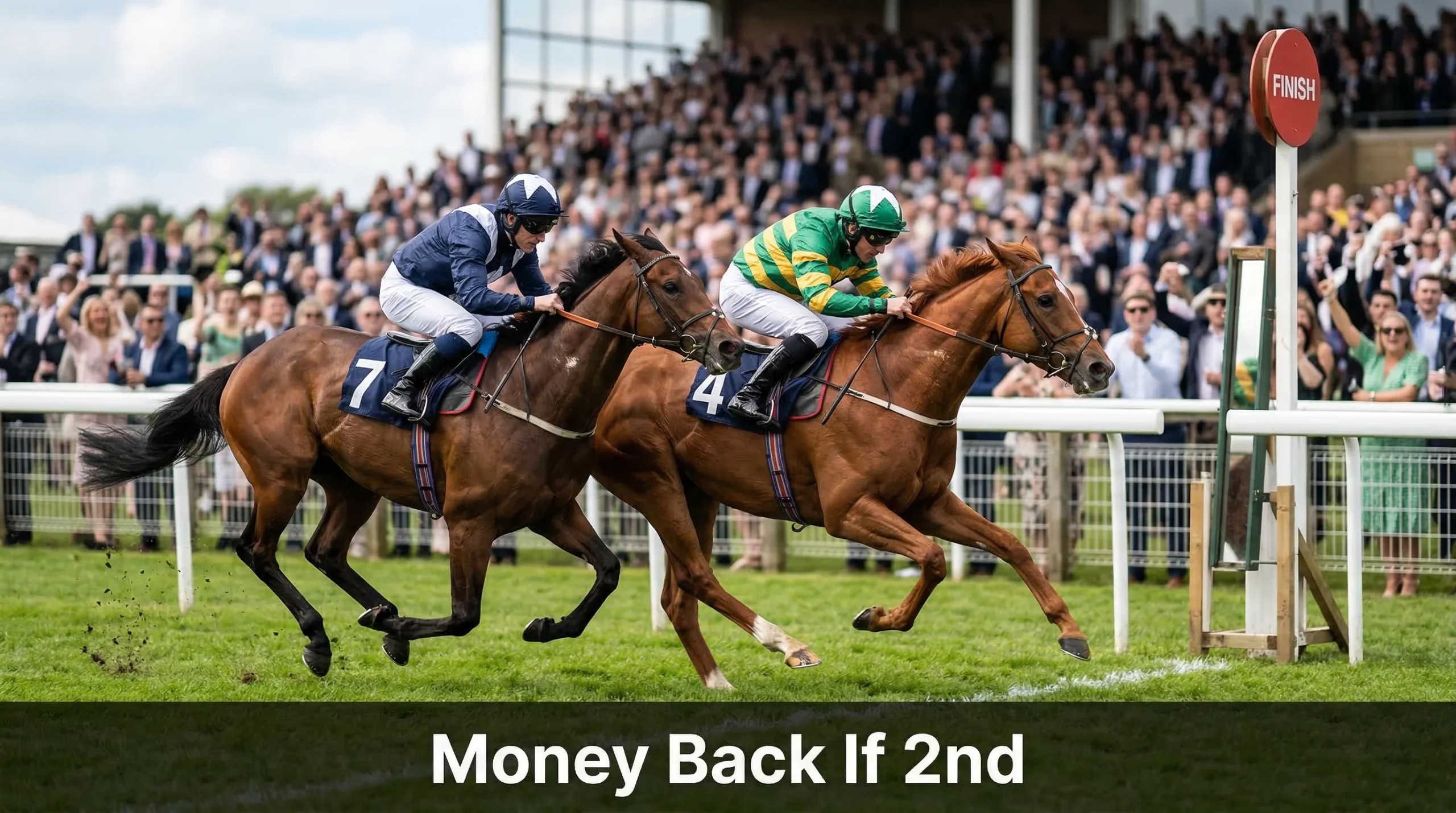
Money back offers promise refunds when specific disappointments occur. Your horse finishes second to the favourite: money back. Your horse falls at the last when leading: money back. Your horse loses by a nose in a photo finish: money back. These promotions turn painful near-misses into recoverable situations, softening the blow of bets that almost won.
The appeal is obvious. Safety net betting reduces the sting of specific bad beats. What is less obvious is the real value these offers provide. Refunds typically come as free bets rather than cash, with their own terms attached. The circumstances triggering refunds occur in a minority of races. And sometimes the offers encourage betting on selections you would otherwise avoid.
Evaluating money back specials honestly requires understanding how often triggers occur, what refunds are actually worth, and when the offers genuinely improve expected value versus when they serve primarily as marketing.
Types of Money Back if 2nd Offers in UK Horse Racing
Second to the favourite is the most common trigger. If your horse finishes second behind the starting price or Betfair favourite, you receive your stake back as a free bet. This offer appears regularly on major races and occasionally on standard meetings. The scenario occurs more often than you might think: favourites win frequently, and the runner-up position is occupied by something at every race.
Beaten by a length or less narrows the trigger to close finishes. Your horse must lose by a small margin for the refund to apply. These offers suit competitive races where tight finishes are likely but exclude runaway defeats. The triggering distance varies by operator: some specify half a length, others a length, some a neck.
Faller refunds protect against horses failing to complete. In jump racing, this means falling, unseating, or refusing at obstacles. A horse leading at the last fence that then falls would trigger this refund, returning your stake for what would have been a winning bet. The emotional utility is high even if the mathematical frequency is relatively low.
Photo finish money back applies when your horse loses in a photo, though sometimes only when losing to the favourite. Operators define photos differently: some require an official photo finish announcement, others simply a very close margin. These offers reward near-misses in the most dramatic fashion, which aligns with their marketing purpose.
Beaten favourite refunds reverse the standard logic, protecting bets on horses that start favourite but lose. If you back the favourite and it finishes second, third, or further back, you receive a refund. This offer protects against the frustration of backing obvious horses that fail to deliver. Its value depends on how often you back favourites, which varies by betting style.
Event-specific money back offers appear around major meetings. Grand National money back if your horse falls, Cheltenham Gold Cup money back if second, Derby money back for beaten favourites. These concentrated promotions reflect bookmaker investment in acquiring and retaining bettors during peak periods. Entain reported that in 2024, the Grand National attracted 700% more bets than the Cheltenham Gold Cup, making that race a particular focus for promotional activity.
Reading the Terms Carefully
Refund format affects real value significantly. Cash refunds are rare; free bet refunds are standard. A free bet refund carries roughly 70-80% of its face value when used optimally, meaning a £10 money back offer really provides £7-8 in expected value. This is still meaningful, but it is less than the headline figure suggests.
Maximum refund amounts cap protection. An offer might state money back up to £25 or money back up to £50. Stakes exceeding these caps receive only partial protection. If you bet £100 and the cap is £50, you receive £50 back as a free bet while absorbing the other £50 loss directly. Understanding caps before staking ensures expectations match reality.
Minimum odds requirements apply to some offers. Your original bet might need to be placed at 2/1 or higher for the refund to apply. This prevents punters from backing very short-priced favourites with heavy protection. If you intended to back a 1/2 shot anyway, a money back offer requiring 2/1 minimum adds no value.
Excluded bet types reduce coverage. Each-way bets, accumulators, or bets placed with free bets may not qualify. The requirement for single win bets at fixed odds is common. Verifying that your intended bet format qualifies prevents assumptions that do not match reality.
Time windows constrain when offers apply. A promotion might cover only the first race of the day, or only races shown on ITV, or only the featured race at each meeting. Missing these windows means placing unprotected bets despite available protection. Checking timing before betting captures available value.
The Advertising Standards Authority requires promotional terms to be clear and not misleading. Bookmaker offers generally comply, but compliance means readable terms, not necessarily generous ones. Reading those readable terms before relying on protection prevents disappointment.
Calculating Real Value
Trigger frequency determines baseline value. If second to the favourite occurs in roughly 15% of races, and you bet £10 per race, you would receive £1.50 in expected refund value per bet before adjusting for free bet conversion. Applying the 75% free bet value factor brings this to approximately £1.12 per bet. On a £10 stake, that is 11% value addition.
Selection choice affects realised value. Money back offers apply only when you back a horse that triggers the condition. If you consistently back outsiders that rarely finish second to the favourite, the offer adds less value than if you back horses regularly competing for minor places. Your betting style interacts with offer structure to determine personal value.
Opportunity cost matters when offers influence selection. If a money back offer encourages you to back a horse you would otherwise avoid, the value calculation must include the expected loss on that altered selection. An offer adding 10% value through potential refunds but directing you toward a poor bet costing 15% in expected value is net negative.
Stacking offers improves total value. If a horse qualifies for both money back if second and Best Odds Guaranteed, you receive benefits from both. Identifying horses where multiple promotions apply concentrates value on single bets. These situations are worth seeking out.
Comparing money back to alternative uses of promotional attention helps prioritise. A money back offer worth 10% of stake competes against other offers with different values. If a price boost on another race offers 20% enhancement, shifting attention there may be optimal. Evaluating all available promotions, not just the most visibly marketed, maximises total captured value.
Finding the Best Money Back Offers
Bookmaker apps display current promotions prominently. Racing sections typically feature a promotions tab or banner showing available offers. Checking this before selecting races identifies where protection exists. Most operators refresh offers daily, with additional promotions appearing for weekend features.
Comparison sites aggregate offers across bookmakers. Oddschecker, Racing Post, and similar resources list current promotions, allowing quick comparison without checking each operator individually. These aggregators typically note key terms, though full details require visiting bookmaker sites directly.
Festival periods concentrate the best offers. Cheltenham, Aintree, and Royal Ascot see money back specials proliferate across all major operators. Planning your betting around these peaks captures more value than spreading attention across the year. The offers are genuinely better, not just more heavily marketed.
Major televised races outside festivals also attract promotions. Saturday ITV Racing selections, evening features at York or Newmarket, and international races covered by UK broadcasters all prompt money back activity. Aligning your betting interest with promotional calendars optimises value capture.
Email and push notifications alert you to new offers, though these communications mix genuine value with promotional noise. Developing the habit of checking offers before betting, rather than relying on alerts alone, ensures you do not miss valuable protection through communication failures or filtering. The effort is minimal; the reward accumulates across many bets.
